eLearning as digital transformation at SAIT
Goal: Students needed repetitive content to operate small equipment
Project: implementation of mobile learning in 2007 for the School of Aviation, SAIT
Role: Product Designer (2007-2013)
*This material is confidential and owned by SAIT
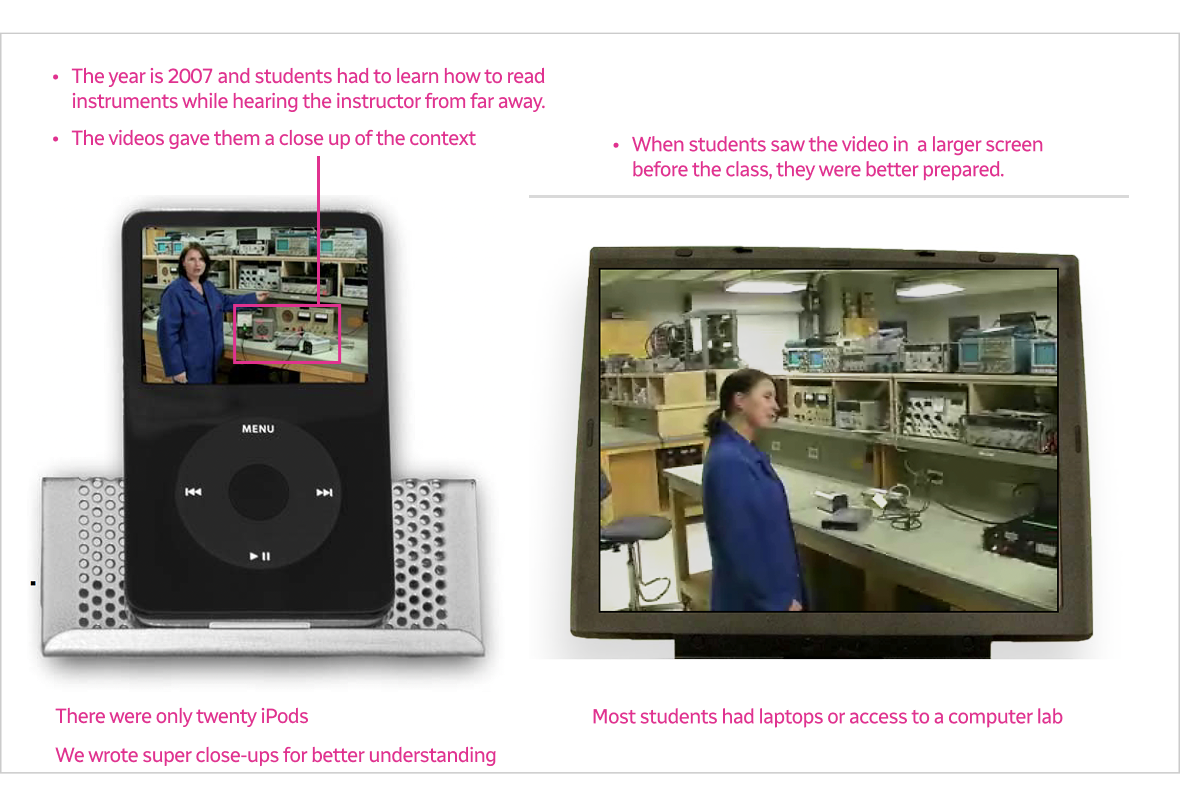
Problem - hard to follow from a distance
The year was 2007. The instructor taught complex technical usage for small equipment.
Students were far away and couldn’t see the detail of the small equipment they had to learn how to operate
Students who couldn’t process information fast enough fell behind.
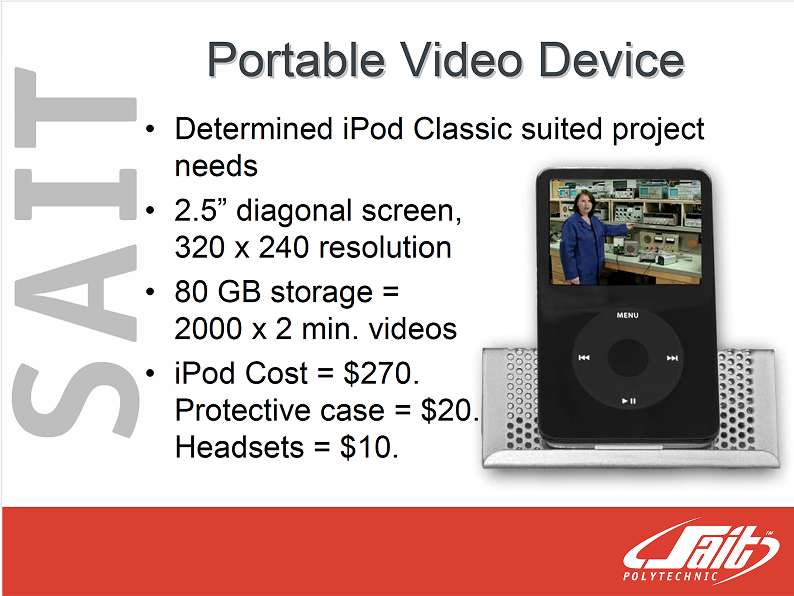
Solution - first mobile learning at SAIT
Mobile learning was not the norm. Along with staff the idea of making portable videos was surfaced.
The process involved writing storyboards with specific close up and super close ups for details
I had to manually deploy videos in the iPods.
Results: innovation through digital transformation with iPods
It was presented at SAIT as revolutionary learning innovation.
The students’ learning improved dramatically.
They took the iPods near the engines of helicopters and planes to have better context, and when they did that, the instructors knew which videos they were watching.
Other instructors at the School of Aviation requested their own videos to deploy on iPods
Process
Design thinking from planning, production to post-production
The instructor needed portable videos for the students and the sponsor wanted to see how feasible it was
Along with the videographer, we interviewed the instructor about the issues she noticed in class
Instructor relayed challenges mentioned by students who had to learn how to operate small equipment from afar
We made a prototype of the instructor demonstrating usage of equipment and tested it on my iPod
We iterated on the type of shots and other technical specifications needed
Goal: from print to digital - save time, effort and cost
Project: digital transformation for the School of Health & Public Safety, SAIT
Role: Product Designer (2007-2013)
*This material is confidential and owned by SAIT
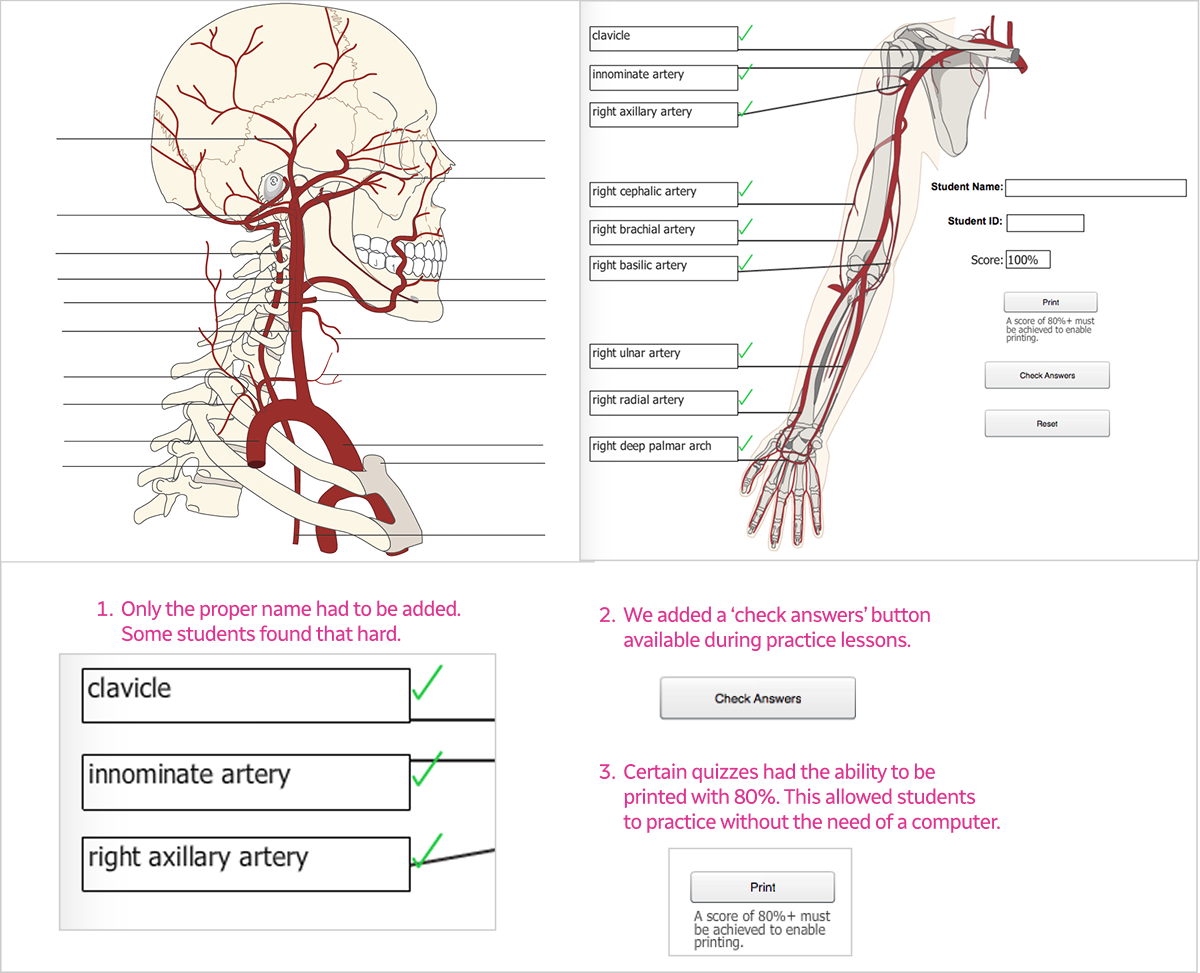
Problem - marking took time
The Subject Matter Expert was used to mark printed tests which took considerable time to interpret student’s calligraphy
They needed updated graphics in colour for those tests
They also wanted a way for students to learn the content in a digital way
Solution - first mobile learning at SAIT
Once I had the illustrations ready for the print version, I paired with a developer
We added a minimum score in a digital exercise they could print when completed.
I added a ‘check answers’ control to build feedback and learn the correct spelling
Results: dynamic learning made a difference in time and effort
When students reached 80% they were able to print the exercise, this to minimize printing and increase accuracy as a reward
Months later the instructor and the instructional designer built tests using the graphics in the Learning Management System
It substituted the printed versions and it became a digital first approach.
Process
Innovation through iteration and testing
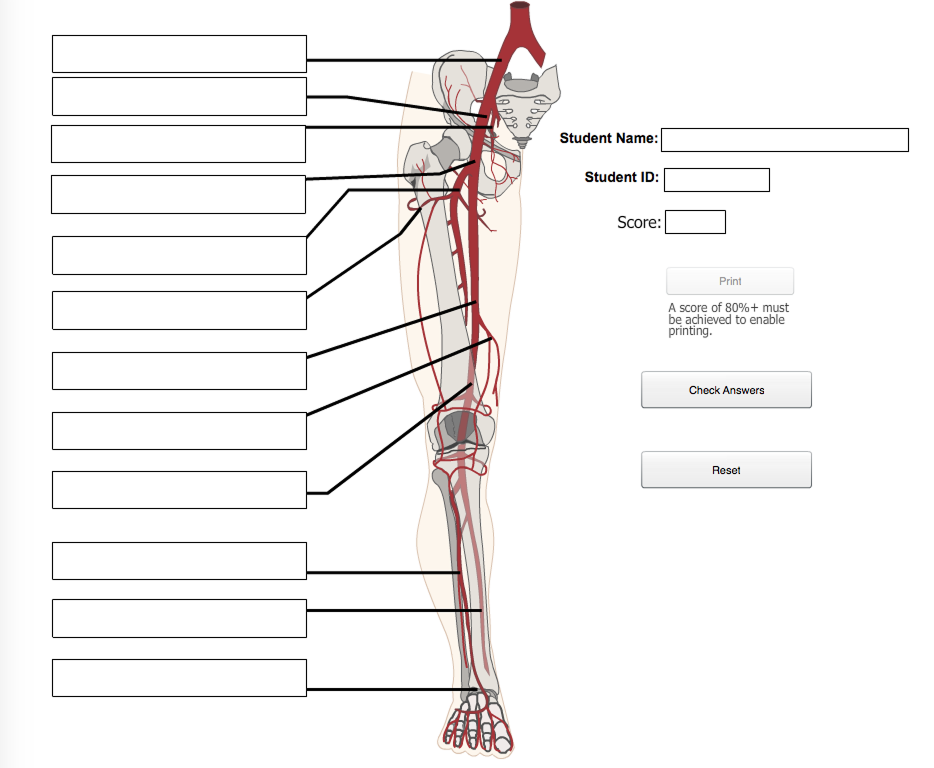
The first goal was to recreate the illustrations for print
I reused the vector assets while working with a developer for the dynamic activity
I tested the answers with a few students who found it hard without a way to check answers
We added the ability to print the activity once 80% had been reached, they could check the answers and practice short term memory
Goal: Improve learning of a hard concept to save time, cost and effort
Project: digital transformation for the School of Construction, SAIT
Role: Product Designer (2007-2013)
*This material is confidential and owned by SAIT
Problem - hard to teach and learn
This concept required logic, physics and math in one learning activity.
It was hard to explain with manuals and hard to learn.
Solution - design thinking in eLearning
I designed the storyboards, prototypes and involved the developer from day one.
I involved the instructors throughout the process since we needed to check accuracy of math and physics
I tested the activity with a few students to measure its usability, having a success rate of 85%.
Results: experts said it was the best way to learn that topic
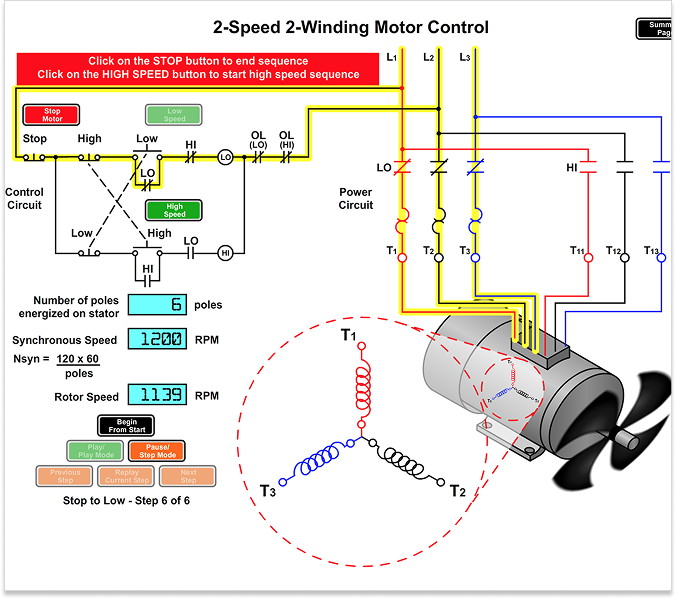
This piece was hailed by an audience of expert electricians as the best way to explain motor controls when it was shown to them.
The instructors spent less time repeating themselves as the dynamic activity provided real time feedback on the process, math and physics required to operate
Process
Innovation through iteration and testing
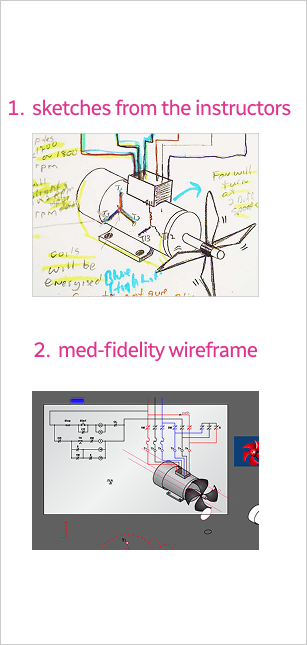
The instructors provided sketches of the activity
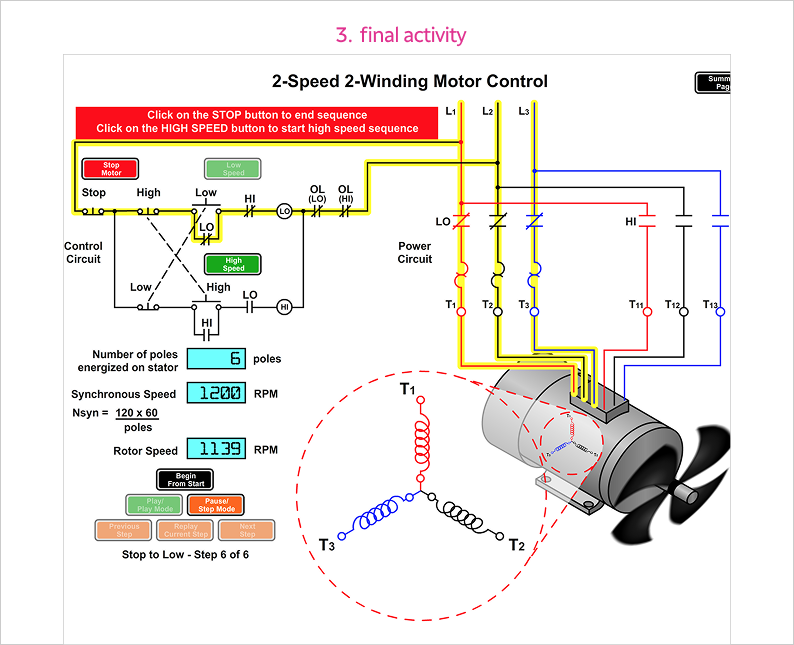
I made a user story map with the developer to understand the steps needed and the feedback throughout each step
I digitized the assets and built a prototype with the developer
I focused on the motion of the piece to make it as realistic as possible with easing
We tested the prototype with instructors and students